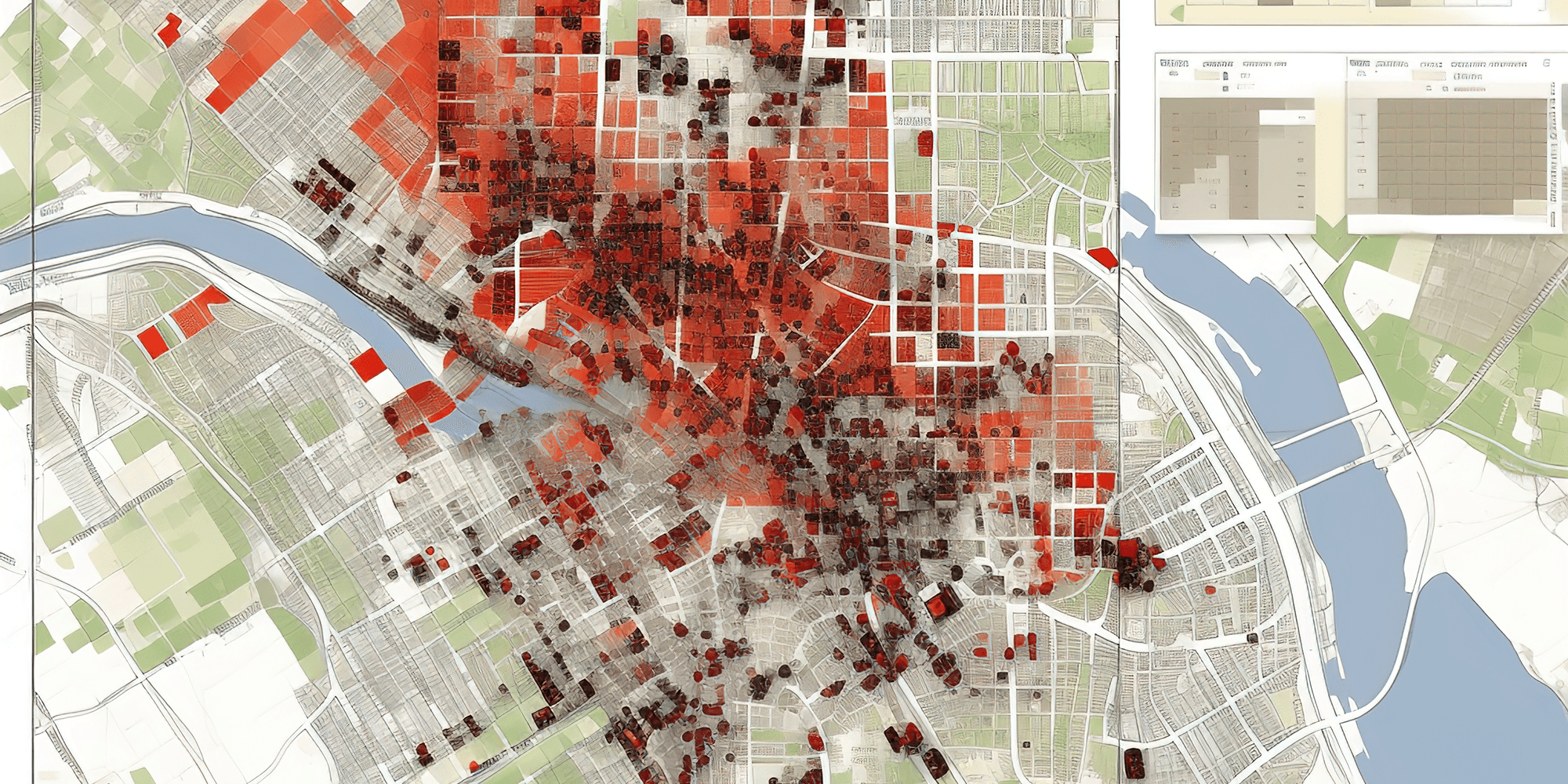
Targeted Humanitarian Maps
Humanitarian response mapping equips aid organizations with accurate, real-time population data. By visualizing communities, transport corridors, and service gaps, NGOs can deliver assistance faster, allocate resources efficiently, and improve outcomes in disaster and recovery scenarios.








How humanitarian response mapping works in practice
Coordinating relief operations demands fast, defensible situational awareness. Population Explorer helps NGOs and agencies plan assessments, target distributions, and monitor coverage with refreshed population data and contextual layers in easy-to-use mapping visuals. Create flexible humanitarian response strategy maps to improve planning and efficiency.
Define operational areas - Draw polygons around impact zones, camps, or supply corridors. Use isochrone shapes to estimate reach from warehouses and clinics by drive or walk time.
Layer population and facilities - Combine LandScan and WorldPop with household and age structure. Overlay Google Places POIs for hospitals, pharmacies, schools, and markets to understand access and critical services.
Prioritize interventions - Compare candidate hubs for coverage, gaps, and overlap. Flag underserved pockets where travel time exceeds thresholds or where facilities are absent.
Export for operations - Generate shapefiles, reports, and ZIP lists for logistics teams, cluster leads, and donors; share with partners for coordinated action.
Beyond counts, responders assess vulnerability (children, elderly), access constraints (damaged bridges, flood lines), and seasonality. These nuances, layered with population data, help teams allocate resources where they will have the greatest impact. As an aside, plotting infrastructure requirements against underlying demographics is a shared workflow with telecom infrastructure and retail site selection - much can be learned by comparing and contrasting these sectors.
FAQs for humanitarian response coordination teams
How do we estimate affected population quickly?
Effective humanitarian response planning requires up to-date data. Use LandScan and WorldPop to calculate affected populations within impact polygons; refine by age or household filters when needed. Adapt the response map as on-the-ground conditions change.
Can we analyze access by travel time?
Yes. Isochrone shapes show drive- and walk-time sheds from warehouses, clinics, and distribution points, highlighting coverage gaps.
How do we identify underserved communities?
Overlay facilities and POIs with population to find areas with long travel times or missing health, water, or food access. Simple, accurate maps can provide immeasurable help in coordinating multiple humanitarian response teams.
Can we import partner data (sites, caseloads, inventories)?
Yes. Upload CSVs for clinics, shelters, and stock locations.
Do you support camp planning and host-community analysis?
Yes. Draw camp perimeters, analyze surrounding host communities, and compare service coverage to mitigate tension and duplication.
What about WASH, health, and food security clusters?
The same workflow applies. Map facilities and target populations to align distribution and services across clusters.
Is this usable across borders?
Yes. LandScan and WorldPop provide consistent global baselines for cross‐border crises and regional responses.
How current is the data compared with census?
Census tables may lag 5-10 years. PopEx refreshes annually with projections to reflect present‐day conditions. This brings more precision to estimating population in humanitarian response conditions and better coordination in its execution. Read more from the EU on using these gridded datasets to inform humanitarian action.
Can we export for donors and coordination bodies?
Yes. See Import & Export for reports, shapefiles, and ZIP lists used in sitreps and donor updates.
How do we de-duplicate partner coverage to avoid overlap?
Import partner site lists as markers, then compare isochrone coverage from each actor. Overlaps signal duplication, while uncovered pockets highlight where to reassign distributions or services.
How are vulnerable groups prioritized?
Use age structure and household layers (e.g., children, elderly) with travel-time to facilities to surface high-need zones. These become priority targets for distributions or mobile clinics. Read use-cases from Akros on how they leverage these gridded population datasets to target malaria, NTD and WASH campaigns.
Why census-only data can misdirect humanitarian planning
In fast-moving crises, census tables often miss displacement, seasonal migration, and new access constraints. Basing plans on outdated counts can over-serve accessible towns while neglecting isolated settlements.
Population Explorer combines annual LandScan and WorldPop updates with Google Places facilities to reflect where people are and how they access services today. Humanitarian response maps built in PopEx are more likely to be representative of present-day conditions.
Benefits of a self-serve humanitarian workflow
Humanitarian response teams need to be agile and adaptive. A self-serve workflow lets operations, ME&L, and cluster leads iterate directly with the latest data.
Agility - Update plans as roads reopen or populations shift.
Cost control - Reduce repeated consultant fees.
Accuracy - Use refreshed LandScan, WorldPop, and Google Places data.
Transparency - Produce defensible, reproducible maps for donors and coordination bodies.
Comparing approaches to humanitarian mapping
Different approaches vary in speed, cost, and defensibility:
Static census spreadsheets - Low cost, but often obsolete during crises; weak for targeting.
Consultant studies - Useful but slow and hard to refresh as conditions change.
Niche tools - May focus on a single sector or country, limiting comparability across contexts.
Population Explorer integrates LandScan, WorldPop, and Google Places in one workflow. Teams can run "what-if" scenarios: what if a bridge reopens, a clinic closes, or a camp expands? Exports drop directly into cluster sitreps, donor decks, and coordination briefs. Keep your humanitarian response operations flexible, coordinated and efficient. For onboarding, see Start Here.
Example: A logistics lead compares two warehouse locations: placing a hub near a reopened road yields a 30% increase in reachable population within 60 minutes, versus retaining the old hub. This comparison helps justify rerouting, funding, and partner tasking.
Last-mile constraints: Plans must account for fuel shortages, damaged bridges, curfews, or security checkpoints. PopEx "what-ifs" show how shifting a warehouse, adding a clinic day, or rerouting around a washed‐out road changes reachable population and delivery times-evidence donors and coordination bodies can approve.